How Loud Is a Home Treadmill? What Actually Makes a Treadmill Noisy?
By Team Powermax
28 Sep 2026
.png)
You don't really think about treadmill noise when you're shopping for one online. You notice it later, when someone is watching TV in the next room, you're running upstairs, or the person below your apartment starts wondering where that rhythmic thumping is coming from. So, how loud is a treadmill at home? There isn't one universal answer. A treadmill can produce a low motor hum while walking, but the sound changes as you increase the speed, start running, or place the machine on a hard floor. Belt movement, foot impact, rollers, cushioning and even maintenance can all change the experience. If you're choosing a Treadmill For Home, understanding where the sound comes from is more useful than simply looking for a machine advertised as “quiet.”
How Loud Is a Treadmill, Really?
A treadmill doesn't have one fixed noise level. At walking speeds, you may mainly hear the motor and the belt moving across the deck. Once you start jogging or running, your footsteps become a much more noticeable part of the sound. Independent treadmill testing also shows why it's difficult to give every treadmill a single decibel figure. Measurements can vary depending on speed, distance from the machine and the testing method. So if you're comparing Treadmill Noise Level, don't treat one number as the complete story. For home use, what matters is how the treadmill sounds during the workout you actually plan to do.
What Actually Makes a Treadmill Noisy?
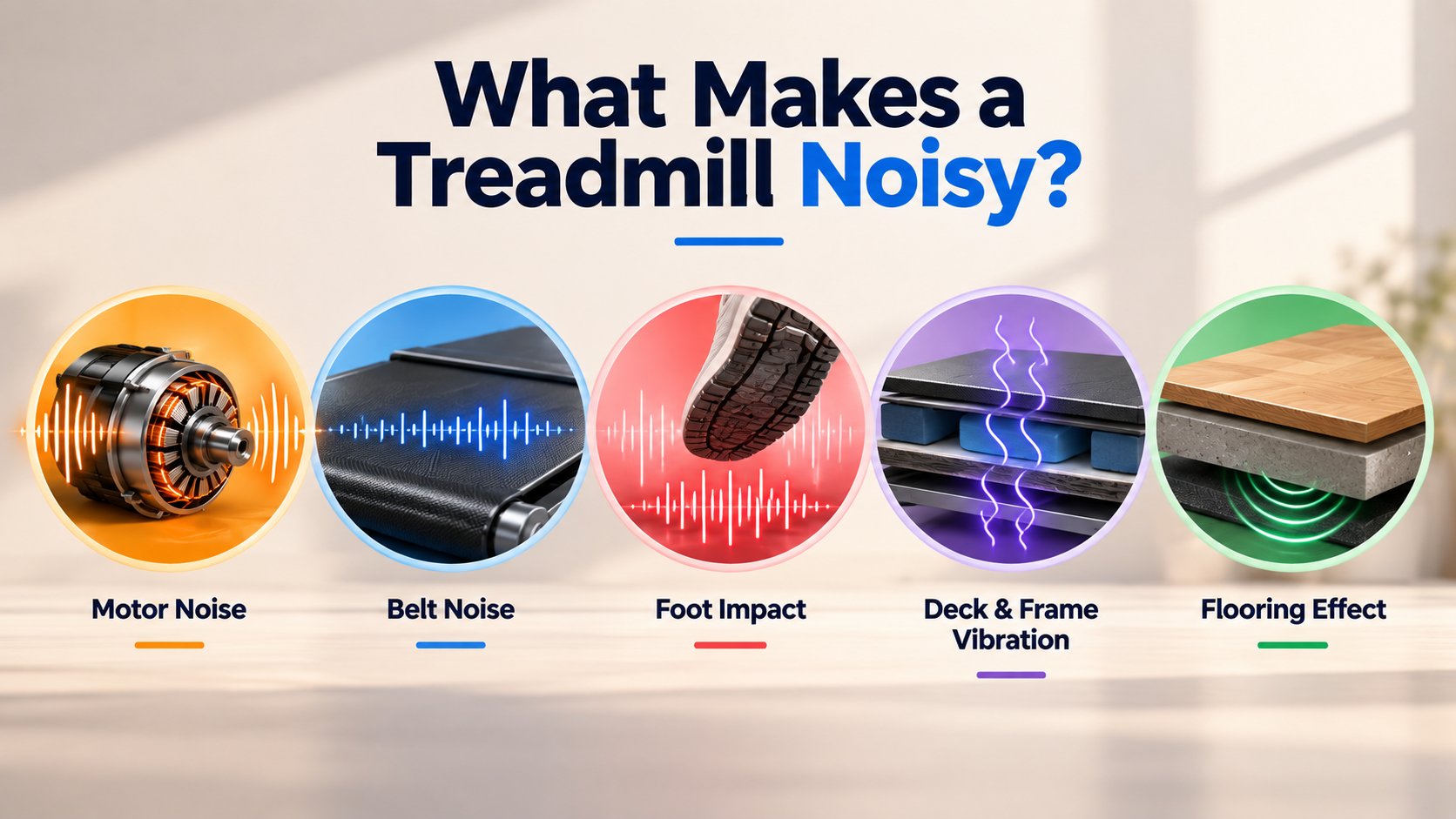
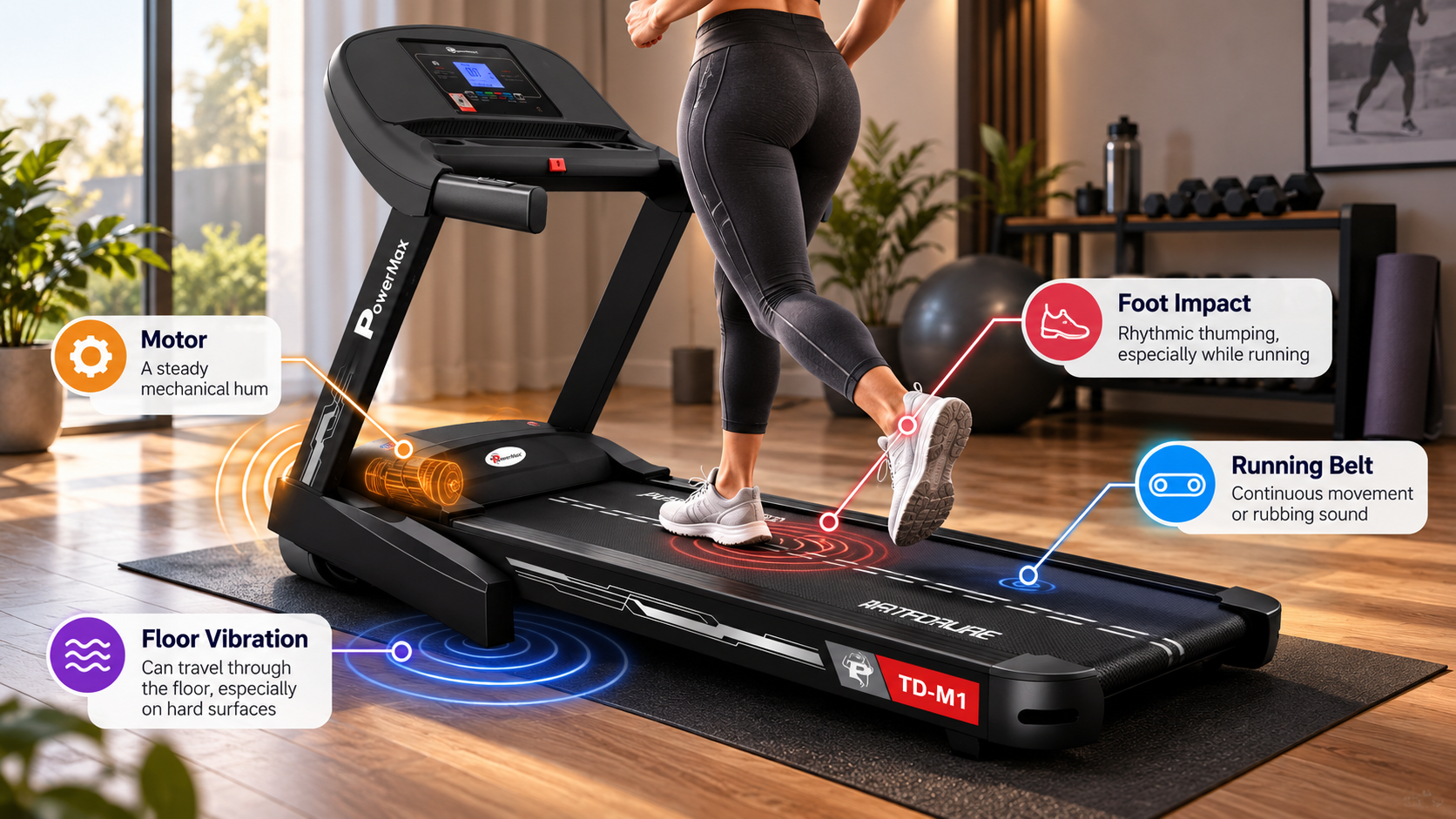
Think about a treadmill as a collection of moving parts rather than one noisy machine.The motor creates one type of sound. The belt moving over the deck creates another. Your feet create impact noise. Then there's vibration, which can travel through the treadmill's frame and into the floor. That's why two treadmills with similar motors can feel very different in a bedroom, living room or apartment.
| Source of noise |
What you may hear |
| Motor |
A steady mechanical hum |
| Running belt |
A continuous moving or rubbing sound |
| Foot impact |
Repeated thumping, especially while running |
| Rollers |
Mechanical movement or rattling if alignment or bearings become an issue |
| Deck |
Impact and structural vibration |
| Flooring |
Can amplify vibration and footsteps |
| Maintenance |
Friction, squeaking or unusual mechanical sounds |
The important distinction is that treadmill noise isn't always motor noise.
Is the Motor the Loudest Part?
Not necessarily. A motor can produce a steady background sound, but once you start running, the sound of your feet landing repeatedly on the deck can become more noticeable. This is particularly relevant if you're using a treadmill in an apartment. The person downstairs may not hear the same sound you hear beside the machine. They may notice the vibration and repeated impact instead. That's also why simply choosing a treadmill with a “quiet motor” doesn't automatically make the entire setup silent.
Speed Changes the Sound
Walking at 4-5 km/h and running at 10-12 km/h are completely different acoustic experiences. As speed increases, the belt moves faster and your footstrikes become more forceful. The result is usually a more noticeable combination of mechanical sound and impact. This matters when choosing Home Exercise Equipment because your intended workout should influence what you consider acceptable. If your routine is mostly walking, a compact Walking Pad or home treadmill designed around lower-speed use may be perfectly comfortable.
If you're regularly running, you should pay much more attention to the running deck, cushioning, construction and overall stability.
Your Floor Could Be the Real Problem
Here's something that often gets overlooked. You may stand beside your treadmill and think, “That isn't particularly loud.” But vibration can behave differently once it reaches the floor. A treadmill sitting directly on a hard surface can transmit more vibration than the same machine placed on a suitable protective mat and stable flooring. This becomes particularly relevant for upper-floor apartments. The solution isn't necessarily to avoid a treadmill. It's to think about where the machine sits and how impact is being transferred through the floor.
Does Treadmill Cushioning Reduce Noise?
Cushioning is primarily designed to make the running experience more comfortable and manage impact, but the construction of the deck can also influence how much vibration you feel. PowerMax's treadmill information highlights shock absorption and cushioning as important parts of treadmill construction. Its commercial treadmill guidance also notes that precision-machined rollers help keep the belt centred and reduce noise and wear. That makes cushioning worth considering when you're comparing Fitness Equipment, but don't confuse cushioning with soundproofing. A cushioned treadmill can still make noise, particularly when someone is running on it.
Rollers and Belt Alignment Matter More Than You Think
A smooth-running belt shouldn't be fighting against the rest of the machine. Poor alignment, excessive friction or worn components can create sounds that aren't part of normal operation. We specifically describe precision-machined steel crowned rollers on several treadmill models as helping keep the belt centred and running smoothly while reducing noise and wear. That means when you're comparing a Treadmill Machine, don't only look at horsepower and maximum speed. Construction details can affect the everyday experience too.
What About the Motor Type?
Motor type can influence the sound profile, but it isn't the only thing that determines how quiet a treadmill feels. Home treadmills commonly use DC motors, while AC motors are also found in heavier-duty treadmill designs. BLDC motors are another option and use electronic control rather than traditional brushes. So if you're comparing an Electric Treadmill, don't assume that simply choosing one motor type automatically guarantees a quieter workout. The motor works together with the belt, rollers, deck, cushioning and frame. That's the bigger picture.
How to Make a Home Treadmill Quieter
You don't need to turn your home gym into a recording studio. Start with the basics. Make sure the treadmill is placed on a stable, level surface. Use a suitable mat where appropriate to protect the floor and help manage vibration. Follow the manufacturer's maintenance instructions and keep an eye on belt condition and lubrication. If the treadmill starts producing unusual squeaks, rubbing sounds or rattling, don't simply turn the volume up on the TV and hope it disappears. Regular maintenance can prevent small mechanical issues from becoming bigger ones. For a broader look at what actually matters when selecting home fitness equipment, you can also read PowerMax Fitness's guide, What Actually Matters When Choosing Fitness Equipment (And What Doesn't). The guide focuses on choosing equipment around your goals, comfort, reliability, ease of use, available space and long-term consistency.
What Should You Look for in a Quiet Treadmill?
If Treadmill Noise is one of your priorities, don't shop by motor horsepower alone. Look at the complete machine. A well-built treadmill should have a stable frame, a properly designed running deck, suitable cushioning, quality rollers and a belt system that runs smoothly. Maintenance requirements matter too. For example, PowerMax's UrbanTrek TD-M1 combines a 6.0HP BLDC motor with a 1210 × 410mm running surface and ComfortTech 6-point damping with a double-layer board. Those specifications don't make it “silent,” but they show why evaluating the complete construction is more useful than judging a treadmill solely by its motor rating.
So, Are Home Treadmills Too Loud?
For most people, the better question isn't whether a treadmill makes noise. Every treadmill makes some noise. The useful question is whether the noise fits your home, your workout style and your surroundings. A person who mostly walks may experience a very different sound profile from someone doing regular high-speed running. Likewise, a ground-floor room with solid flooring can feel very different from an upstairs apartment. That's why how loud a treadmill is depends on much more than the motor.
Quick Checklist Before Buying
| What to check |
Why it matters |
| Motor type |
Influences mechanical sound and performance |
| Running belt |
Smooth movement can reduce unnecessary friction |
| Rollers |
Quality rollers can help reduce noise and wear |
| Cushioning |
Helps manage running impact |
| Frame stability |
Reduces unwanted movement and vibration |
| Flooring |
Can amplify or dampen vibration |
| Maintenance |
Poor lubrication or alignment can create extra noise |
| Your workout |
Running creates more impact than walking |
Final Take
A treadmill isn't supposed to be completely silent. What you want is controlled, predictable noise rather than unnecessary rattling, squeaking, friction or excessive vibration. When choosing a treadmill for home, look beyond the motor specification. Consider the belt, rollers, running deck, cushioning, frame and the floor where you'll actually use it. Because ultimately, treadmill noise isn't just about what the machine sounds like. It's about what your entire home hears when you start moving.
FAQs
How loud is a treadmill at home?
There is no single noise level for every treadmill. Sound changes with speed, workout intensity, machine construction, flooring and measurement conditions.
Are treadmills noisy for apartments?
They can be, particularly during running. Foot impact and vibration may travel through floors, so placement, cushioning and a suitable floor mat can matter.
Is a treadmill motor supposed to be loud?
A steady motor hum is normal, but sudden grinding, squeaking, rattling or unusual mechanical sounds can indicate that the treadmill needs inspection or maintenance.
Does a treadmill mat reduce noise?
A mat can help manage vibration and protect the floor, although it won't make a treadmill silent.
Is a BLDC treadmill quieter?
BLDC motors can offer efficient and controlled operation, but overall Treadmill Noise also depends on the belt, rollers, deck, cushioning, frame and how the treadmill is used.
Does running make a treadmill louder than walking?
Usually, yes. Higher speeds increase belt movement and running creates greater foot impact, so the overall sound can become more noticeable.
 Service
 India
India UAE
UAE Store Locator


-thumb.jpg)
-thumb.jpg)
-thumb.jpg)
-thumb.jpg)
-thumb.jpg)
-thumb.jpg)
-thumb.jpg)
-thumb.jpg)
-thumb.jpg)
-thumb.jpg)