 Service
 India
India UAE
UAE Store Locator


What Does Zero Gravity Mean on a Massage Chair?
.png)
The phrase “zero gravity” sounds like something that belongs in a spacecraft rather than a living room. But on a massage chair, it has a much simpler meaning. The chair reclines, raises your legs and changes the way your body is supported. You are not actually floating or escaping gravity. Instead, the chair puts you into a more reclined, supported posture that can make the massage feel noticeably different. If you're browsing massage chairs for home, this is one of those features that looks impressive on a specification sheet but makes more sense once you understand what actually happens when you sit in the chair.
So, What Does Zero Gravity Actually Mean?
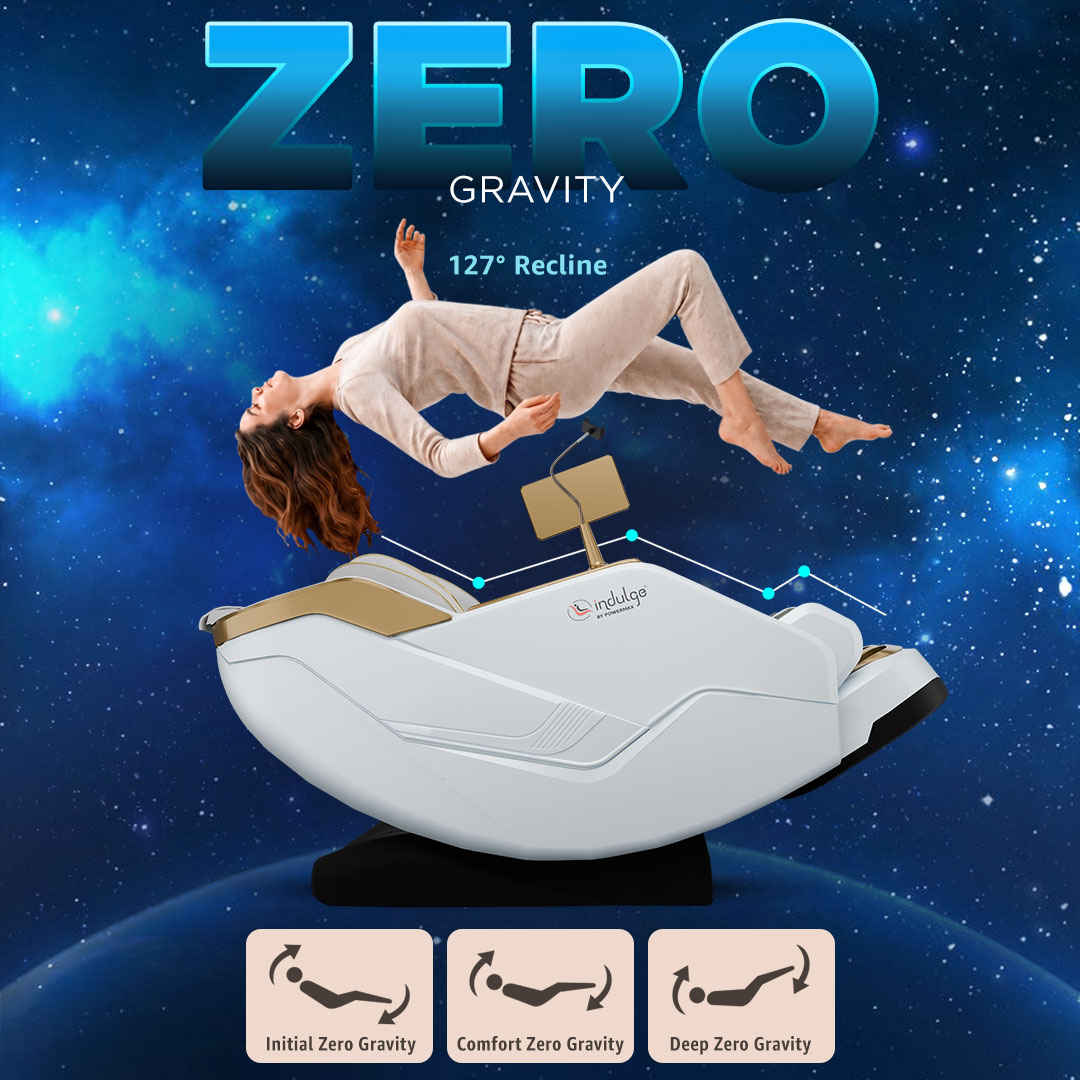
In simple terms, zero gravity on a massage chair is a reclined position where your upper body moves back while the leg section rises. Instead of sitting upright with most of your weight going down through the seat, your body is supported across a larger portion of the chair. The name comes from the neutral body posture associated with spaceflight, but the chair obviously doesn't remove gravity. It simply uses a particular reclined position to change your posture and weight distribution. That change in position is what you actually feel.
The PowerMax massage chair range includes massage chairs alongside other massager categories, so you can compare the type of equipment that fits your preferred relaxation setup.
No. It is a name for a particular reclined body position. You still experience normal gravity.
Does every massage chair have the same zero-gravity angle?
No. Recline angles and designs vary between models and manufacturers.
Does zero gravity make a massage chair more comfortable?
It can. Raising the legs and reclining the body changes how your weight is supported, which many users may find more relaxing.
Is zero gravity the most important massage-chair feature?
Not necessarily. The massage track, rollers, airbags, foot massage, heat, fit and recline design should also be considered.
How long can you use the PMC-3 massage chair?
PowerMax's current specifications list a maximum operating period of 30 minutes per session for the PMC-3.
So, What Does Zero Gravity Actually Mean?
In simple terms, zero gravity on a massage chair is a reclined position where your upper body moves back while the leg section rises. Instead of sitting upright with most of your weight going down through the seat, your body is supported across a larger portion of the chair. The name comes from the neutral body posture associated with spaceflight, but the chair obviously doesn't remove gravity. It simply uses a particular reclined position to change your posture and weight distribution. That change in position is what you actually feel.
Why Does a Massage Feel Different in Zero Gravity?
Try sitting upright on a regular chair and then leaning back with your legs raised. Your body immediately feels different. A massage chair uses that same basic idea while its rollers, airbags and other massage functions are working. With your back reclined and legs elevated, the chair supports more of your body. The massage can therefore feel more settled and immersive than it might in a conventional upright position. It's also why zero gravity is often associated with relaxation. You're not sitting there holding yourself upright; you're letting the chair do more of the supporting.Zero Gravity Isn't Just About Reclining
This is where the terminology can get confusing. A regular recline simply means the backrest moves backward. Zero gravity is a specific type of supported recline, usually involving both the backrest and leg section. The exact angle isn't identical across every massage chair, either. Different manufacturers can use different positions and terminology, so the phrase shouldn't be treated as a universal measurement.For someone shopping for a full body massage chair, the more useful question is therefore not just “Does it have zero gravity?” Look at how the chair reclines, how much space it needs, how the leg section feels and how the massage mechanism works in that position.How PowerMax Uses Zero Gravity
PowerMax lists zero gravity as one of the features available across its massage-chair range, alongside other massager options such as leg and foot massagers and vibration plates. One example is the PMC-3 Full Body Massage Chair with Zero Gravity Function. The model uses an SL Track, 30 airbags, 4D massage, waist and calf heating, foot rollers and a touchscreen remote. Its specifications also list a 127-degree reclined position and a maximum operating period of 30 minutes per session. The important point is that zero gravity isn't working on its own. The reclined position is just one part of the experience. The track, rollers, airbags, heat, foot massage and controls all contribute to how the chair actually feels.
What Should You Look For Besides Zero Gravity?
It's easy to get caught up in one attractive feature when shopping for a massage chair. A better approach is to look at the whole chair.Is Zero Gravity Worth Having?
For someone who enjoys a deeply reclined, supported massage, zero gravity can be a genuinely useful feature. But it shouldn't be the only thing you look at. A massage chair can have zero gravity and still feel very different from another chair with the same feature. The fit of the chair, massage mechanism, pressure settings, leg section and recline design all matter. Think of zero gravity as part of the experience rather than the entire experience. Once you understand that, the feature becomes much easier to evaluate. Instead of being impressed by the name, you can ask the practical question: Does this position make the chair more comfortable for the way I actually want to use it?Final Thought
Zero gravity on a massage chair doesn't mean weightlessness. It means the chair reclines your body into a more supported position, usually while raising your legs. That simple change can alter how your body rests against the chair and how the massage feels. And that's really the useful part of the feature. Forget the space-age name for a moment and think about posture, support, comfort and the overall massage experience.FAQs
Is zero gravity on a massage chair actually zero gravity?No. It is a name for a particular reclined body position. You still experience normal gravity.
Does every massage chair have the same zero-gravity angle?
No. Recline angles and designs vary between models and manufacturers.
Does zero gravity make a massage chair more comfortable?
It can. Raising the legs and reclining the body changes how your weight is supported, which many users may find more relaxing.
Is zero gravity the most important massage-chair feature?
Not necessarily. The massage track, rollers, airbags, foot massage, heat, fit and recline design should also be considered.
How long can you use the PMC-3 massage chair?
PowerMax's current specifications list a maximum operating period of 30 minutes per session for the PMC-3.
-thumb.jpg)
-thumb.jpg)
-thumb.jpg)
-thumb.jpg)
-thumb.jpg)
-thumb.jpg)
-thumb.jpg)
-thumb.jpg)
-thumb.jpg)
-thumb.jpg)